
The Evolution of Underwater Thrusters: From Early Diving Tools to Modern Electric Underwater Propulsion Systems
Underwater propulsion technology has transformed the way humans explore, work, and operate beneath the water. From early mechanical diving assistance tools to today’s advanced electric underwater scooters and marine propulsion systems, underwater thrusters have become an essential technology for diving, marine applications, and professional underwater operations.
As demand grows for efficient, compact, and reliable underwater mobility solutions, manufacturers continue to develop smarter electric propulsion systems powered by advanced motors and battery technologies.
- The Early Development of Underwater Propulsion
Human exploration beneath the water has always been limited by natural movement. Traditional diving relied mainly on human swimming ability, which restricted underwater distance, speed, and working time.
In the early 20th century, engineers began exploring mechanical solutions to improve underwater mobility. Early underwater propulsion concepts included small motorized devices designed to assist divers and reduce physical effort.
These early systems were relatively large, complex, and mainly used for military or professional purposes. However, they established the foundation for modern underwater propulsion technology.
- The Birth of the Underwater Scooter
The development of compact electric motors and rechargeable batteries opened a new chapter for underwater mobility.
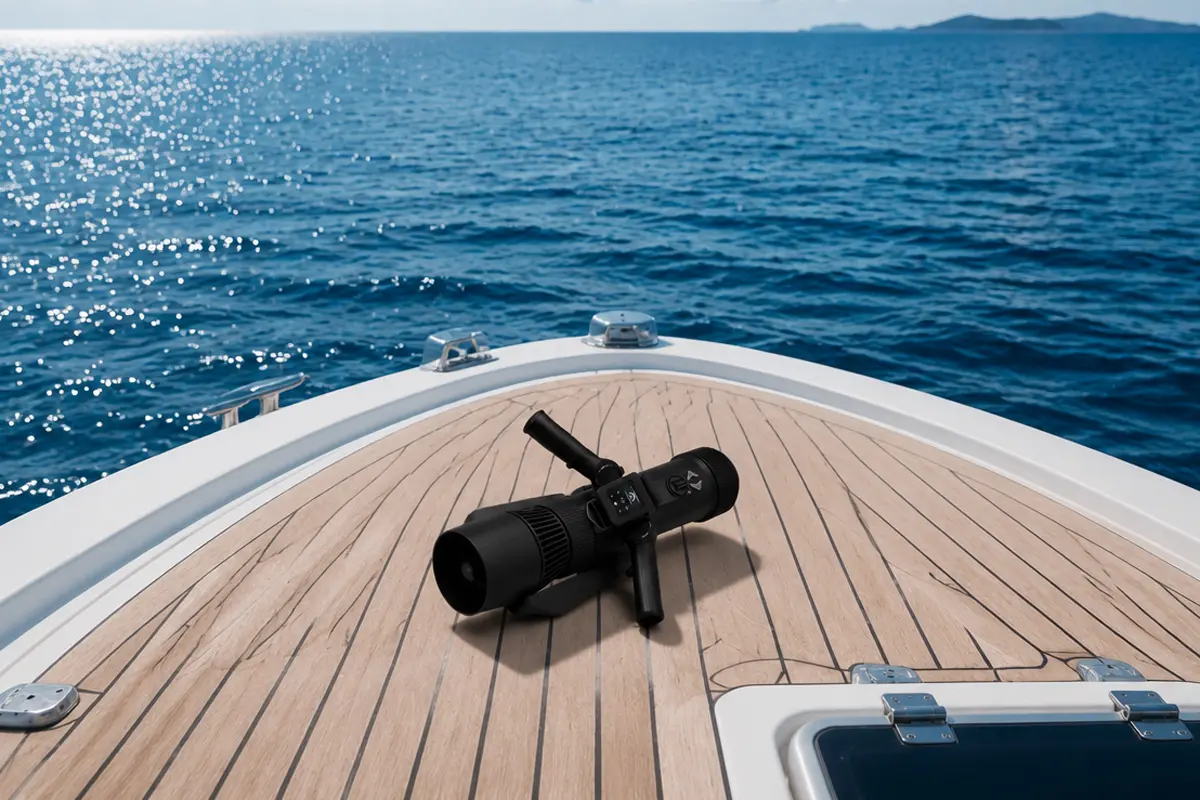
Modern underwater scooters, also known as Diver Propulsion Vehicles (DPVs), began to appear as practical tools for divers. These devices use an electric motor to drive a propeller, allowing users to travel farther underwater with less physical effort.
Compared with traditional diving methods, underwater scooters provide:
Increased underwater travel distance
Improved energy efficiency
Better diving experience
Enhanced exploration capability
Today, underwater scooters are widely used in recreational diving, snorkeling, underwater photography, marine exploration, and professional applications.
- Advances in Electric Underwater Propulsion Technology
With continuous improvements in battery technology, waterproof engineering, and motor efficiency, underwater propulsion systems have become smaller, lighter, and more powerful.
Modern underwater thrusters typically integrate:
High-Efficiency Electric Motors
Brushless motors have become a key technology in underwater propulsion systems due to their:
High efficiency
Low maintenance requirements
Longer operating life
Stable underwater performance
Brushless motor technology enables underwater scooters and marine propulsion systems to achieve reliable power output while maintaining compact designs.
Advanced Battery Systems
Battery technology plays an important role in underwater mobility.
Modern lithium battery systems provide:
Longer operating time
Higher energy density
Reliable power delivery
Compact product design
These improvements allow underwater scooters to support longer diving sessions and more demanding marine applications.
Improved Waterproof Engineering
Underwater equipment requires strict protection against water intrusion.
Advanced underwater propulsion systems use:
Precision sealing structures
Waterproof motor housings
Pressure-resistant designs
Reliable testing procedures
These technologies ensure stable operation in challenging marine environments.
- The Growth of Marine Propulsion Systems
Beyond personal diving equipment, electric propulsion technology has expanded into broader marine applications.
Today, underwater propulsion systems are used for:
Small boats
Inflatable boats
SUP boards
Marine inspection equipment
Research platforms
Rescue applications
Compact electric marine propulsion solutions provide cleaner and more efficient alternatives to traditional fuel-powered systems.
As environmental awareness increases, electric marine propulsion is becoming an important direction for future marine transportation.
- The Future of Underwater Propulsion Technology
The future of underwater propulsion will continue moving toward:
Smarter Control Systems
Future underwater scooters and marine propulsion devices will integrate more intelligent control technologies, improving user experience and operational efficiency.
More Compact Designs
Advances in motors and batteries will allow manufacturers to create smaller and more powerful propulsion systems.
Wider Industrial Applications
Electric underwater propulsion technology will continue expanding into:
Marine robotics
Scientific research
Professional inspection
Rescue operations
Recreational diving
- KESZING: Developing Advanced Underwater Propulsion Solutions
As a professional underwater propulsion manufacturer, KESZING focuses on the development of electric underwater scooters, marine propulsion systems, and brushless motor solutions.
By combining advanced motor technology, waterproof engineering, and manufacturing capabilities, KESZING provides reliable propulsion solutions for global